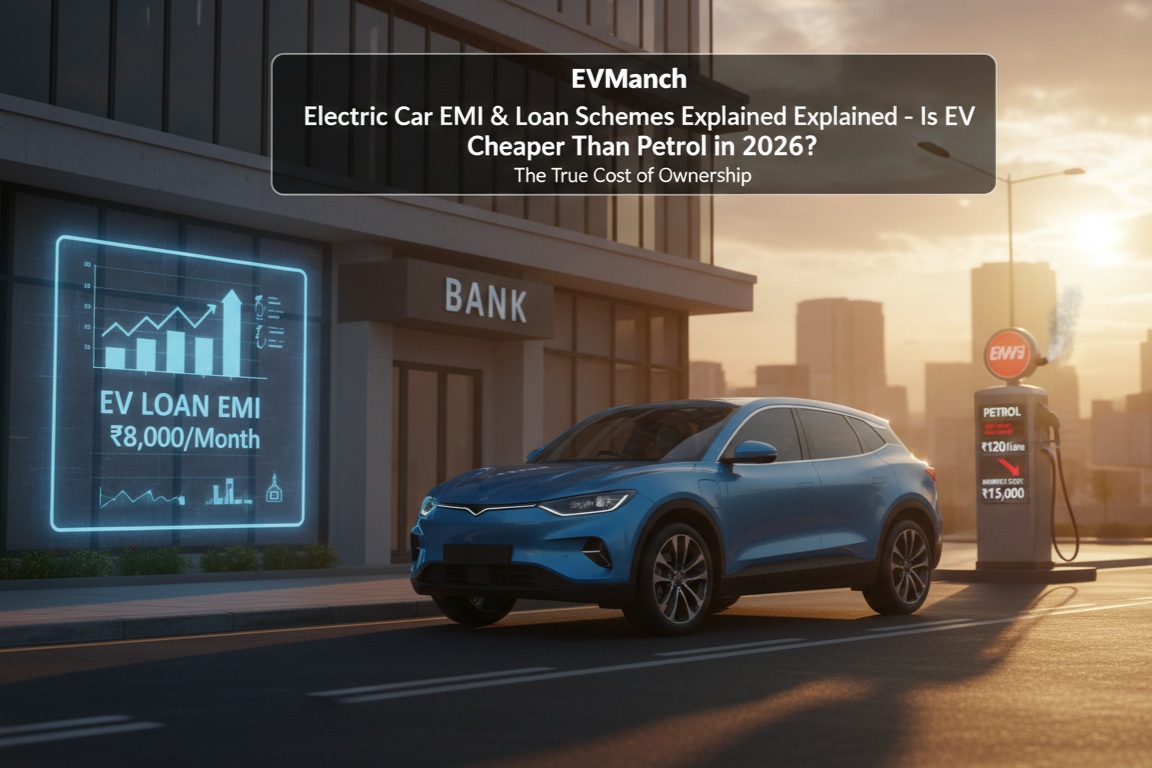
Electric Car EMI & Loan Schemes Explained – Is EV Cheaper Than Petrol?
One of the biggest questions Indian car buyers ask in 2026 is:
“Is buying an electric car actually cheaper than petrol?”
While EVs may have a slightly higher upfront cost, lower running expenses, government incentives and special EV loan schemes make them financially attractive in the long run.
In this detailed guide, we break down electric car EMI options, loan interest rates, total ownership cost and petrol vs EV comparison.
💰 Electric Car EMI in India (2026)
Most banks and NBFCs now offer dedicated EV car loans with competitive interest rates.
Typical EV Loan Details:
Down Payment: 10% – 20%
Loan Tenure: 5 – 8 years
Interest Rate: 8% – 10% (varies by bank)
Processing Fee: 0.5% – 1%
📊 Example EMI Calculation
Let’s compare a ₹15 lakh electric SUV (e.g., Tata Nexon EV):
On-road price: ₹16 lakh
Down payment (15%): ₹2.4 lakh
Loan amount: ₹13.6 lakh
Tenure: 7 years
Interest: 9%
Estimated EMI:
₹22,000 – ₹24,000 per month
Now compare similar petrol SUV at ₹14 lakh:
EMI difference is small — but running cost difference is huge.
⛽ Petrol vs Electric – Running Cost Comparison
Petrol SUV
Mileage: 15 km/l
Petrol price: ₹105/litre
Cost per km: ₹7 per km
If you drive 1,500 km/month:
₹10,500 fuel expense monthly
Electric SUV
Electricity cost: ₹8 per unit
Avg efficiency: 6 km per kWh
Cost per km: ₹1 – ₹1.5 per km
1,500 km/month:
₹1,500 – ₹2,000 charging cost
💸 Monthly Savings
CategoryPetrol SUVElectric SUVEMI₹21,000₹23,000Fuel/Charging₹10,500₹1,800Total₹31,500₹24,800
👉 EV saves approx ₹6,000 – ₹8,000 per month.
Over 5 years → ₹4–5 lakh savings possible.
🏦 Government Incentives & Benefits
Even though FAME subsidies are reducing, EV buyers still get:
✔ Road tax exemption (in many states)
✔ Registration fee waiver
✔ State EV subsidies (in select states)
✔ Lower maintenance cost
🔧 Maintenance Cost Comparison
Petrol car:
Engine oil changes
Clutch replacements
Exhaust maintenance
More moving parts
EV:
Fewer moving parts
No engine oil
Lower service frequency
Estimated 5-year maintenance savings:
₹40,000 – ₹80,000
📈 Long-Term Ownership Cost (5-Year Estimate)
Petrol SUV (₹14 lakh)
Fuel cost (5 years): ₹6 – ₹7 lakh
Maintenance: ₹1 lakh
Total running cost: ₹7 – ₹8 lakh
Electric SUV (₹16 lakh)
Charging cost (5 years): ₹1.2 – ₹1.5 lakh
Maintenance: ₹40,000
Total running cost: ₹1.6 – ₹2 lakh
👉 EV saves ₹5 – ₹6 lakh over 5 years.
⚡ Special EV Loan Advantages
Many banks offer:
Lower interest rate for EVs
Longer tenure
Green loan category
Faster processing
Some manufacturers offer exchange bonuses and corporate discounts.
🏆 When Is EV Cheaper Than Petrol?
EV becomes financially better if:
✔ You drive more than 1,000 km per month
✔ You plan to keep car for 5+ years
✔ You have home charging facility
✔ You choose efficient EV model
⚠ When EV May Not Be Ideal
Very low monthly usage (<500 km)
No home charging access
Rural charging infrastructure concerns
💡 Example – Tata Nexon EV vs Petrol Nexon
Over 5 years:
EV ownership cost lower by ₹4–6 lakh
Better resale value expected
Lower daily running stress
🔋 Battery Warranty Factor
Most EVs offer:
8 years battery warranty
1.6 lakh km coverage
This reduces long-term risk concerns.
📊 Final Comparison Summary
FactorPetrol CarElectric CarInitial CostLowerSlightly HigherEMISimilarSimilarRunning CostHighVery LowMaintenanceModerateLow5-Year Savings❌✅
🏁 Final Verdict – Is EV Cheaper Than Petrol?
Yes — in most real-world usage scenarios, electric cars are cheaper than petrol cars over a 5-year period.
Even though the initial cost may be slightly higher, lower running and maintenance expenses make EVs financially smarter in 2026.
If you drive regularly and have access to charging, switching to electric makes strong economic sense.
Stay tuned to EVManch for more EV buying guides and finance comparisons.
❓ Frequently Asked Questions
Q1: Is electric car EMI higher than petrol?
Slightly, but difference is small.
Q2: How much can I save monthly with EV?
₹6,000 – ₹8,000 depending on usage.
Q3: Is EV loan interest lower?
Many banks offer green financing rates.