
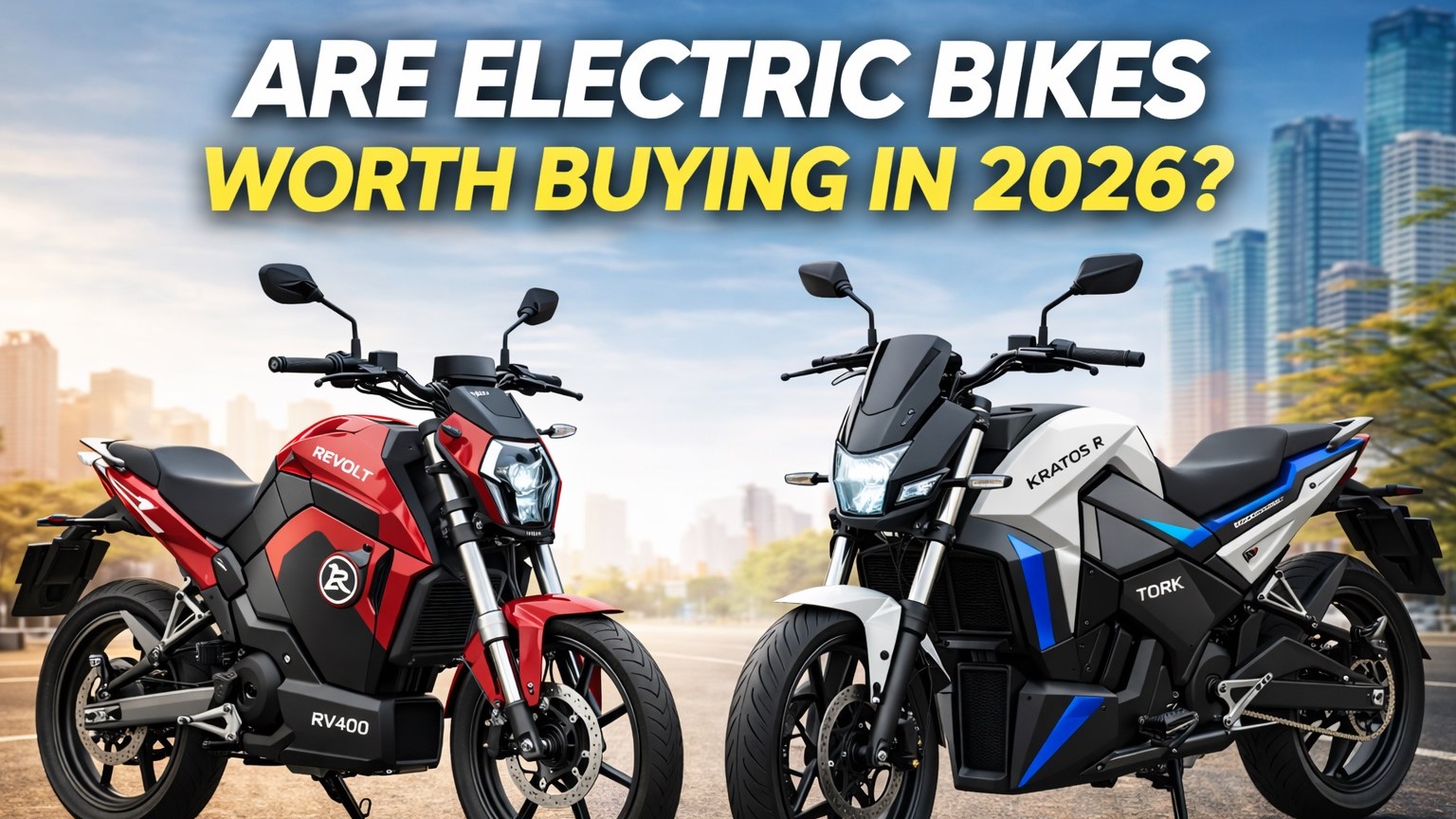
Are Electric Bikes Worth Buying in 2026? Complete Buyer’s Guide
Electric vehicles are rapidly transforming the Indian automotive market, and electric bikes are becoming increasingly popular among urban commuters and young riders. But the big question remains: Are electric bikes worth buying in 2026?
In this detailed guide, we will analyze cost, performance, range, charging infrastructure, maintenance, and long-term value to help you decide whether an electric bike is the right investment for you in 2026.
investment for you in 2026.
Why Electric Bikes Are Gaining Popularity in 2026
Several factors are driving the growth of electric bikes in India:
· Rising petrol prices
· Lower running cost compared to fuel bikes
· Government incentives and EV subsidies
· Improved battery technology
· Growing charging infrastructure
With advancements in lithium-ion batteries and better motor efficiency, electric bikes in 2026 offer better range, faster charging, and improved reliability.
Cost Comparison: Electric Bike vs Petrol Bike
One of the biggest reasons buyers consider EV bikes is cost savings.
Running Cost
· Electric bike: Approx. ₹0.20–₹0.40 per km
· Petrol bike: Approx. ₹2–₹3 per km
Over time, this difference results in significant savings, especially for riders who commute daily.
Maintenance Cost
Electric bikes have:
· Fewer moving parts
· No engine oil changes
· No clutch or gearbox maintenance
This means lower servicing costs compared to traditional petrol motorcycles.
Range & Battery Performance in 2026
Modern electric bikes now offer:
· 120–200 km range (depending on model)
· Fast charging capability
· Removable battery options (in select models)
For daily city commuting (15–40 km per day), even a 120 km range electric bike is more than sufficient.
However, long-distance highway riders may still prefer petrol bikes due to faster refueling convenience.
Charging Infrastructure in India (2026)
Charging infrastructure has improved significantly:
· Public fast charging stations in metro cities
· Highway EV charging expansion
· Home charging solutions available
· Office charging becoming common
Most electric bike owners charge overnight at home, making daily commuting convenient and cost-effective.
Performance & Riding Experience
Electric bikes provide:
· Instant torque
· Smooth acceleration
· Silent operation
· No gear shifting
Performance-focused models like the Revolt RV400 and the Tork Kratos offer sporty riding experiences suitable for urban riders.
However, high-performance petrol bikes may still offer better top speeds and long-distance endurance.
Who Should Buy an Electric Bike in 2026?
Electric bikes are worth buying if:
· You ride mostly within city limits
· Your daily travel is under 50 km
· You have access to home charging
· You want to save on fuel expenses
· You prefer eco-friendly transportation
If you frequently travel long highway distances, a petrol bike may still be more practical.
Long-Term Value & Resale
Battery life in 2026 EV bikes typically lasts:
· 5–8 years depending on usage
· 800–1500 charge cycles
As EV adoption grows, resale value of electric bikes is improving, especially for well-known brands.
Final Verdict: Are Electric Bikes Worth Buying in 2026?
Yes — for most urban commuters, electric bikes are absolutely worth buying in 2026.
They offer lower running costs, reduced maintenance, smoother performance, and environmental benefits. With expanding charging infrastructure and improving battery technology, EV bikes are becoming a smart long-term investment.
However, if your usage involves long-distance highway riding or rural travel without charging access, a petrol motorcycle might still be more convenient.